
The short version
- An audio podcast is cheaper and simpler to make. A video podcast costs more but gives you far more to do with each recording.
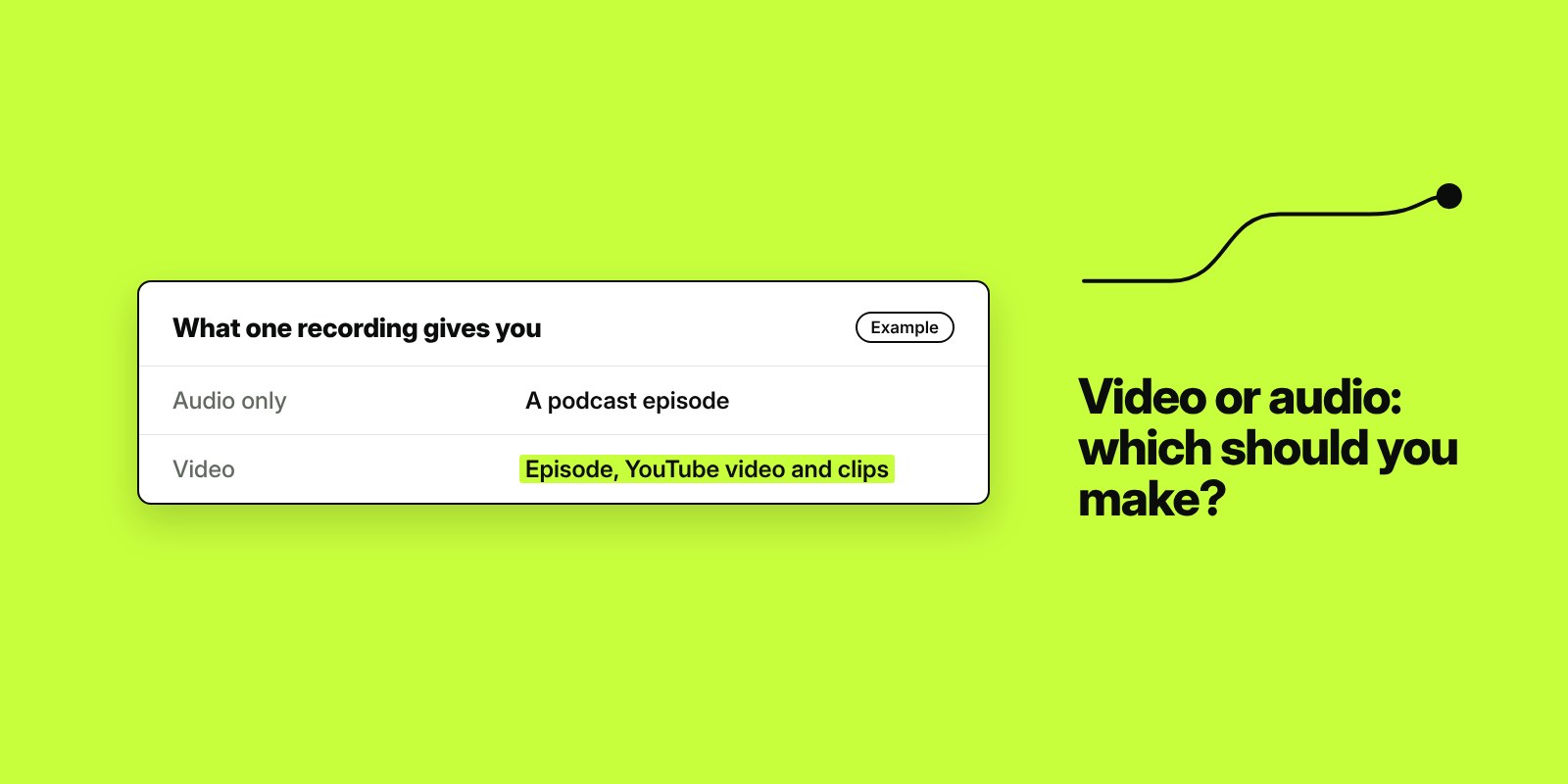
- One video recording becomes a podcast episode, a YouTube video and a set of short clips for social media. Audio alone gives you the episode.
- For most businesses, the short clips are where people first see the show, and they need video to work well.
- Video asks more of you: a tidy background, good lighting, at least one camera angle, and more editing.
- If you record video, you can always publish the audio on its own. If you only record audio, you can’t add video later.
When a business decides to start a podcast, one of the first questions is whether to make it audio only or video too. Audio is cheaper and easier. Video costs more, but each recording does a lot more work. This guide compares the two honestly, so you can decide what suits your business, your budget and the time you have.
If you haven’t decided whether a podcast is right for you yet, start with is a podcast worth it for a small business. For the full process, see how to start a podcast for your business.
Audio and video side by side
| Audio only | Video | |
|---|---|---|
| What you get from one recording | A podcast episode | A podcast episode, a YouTube video and short clips for social media |
| Kit | Microphones and headphones | Microphones, headphones, at least one camera and lighting |
| Room | Quiet, with soft furnishings | Quiet, and it has to look good on camera |
| Editing | Simpler | Takes longer: switching angles, framing, colour |
| Cost | Lower | Higher, but spread across more pieces of content |
| Where people find it | Podcast apps | Podcast apps, YouTube and social media feeds |
| Comfort | Easier for camera-shy guests | Some people find the camera off-putting at first |
Why most businesses should record video
The clips are where people discover you
Most people won’t find your show in a podcast app. They’ll see a 40-second clip in their LinkedIn, Instagram or TikTok feed, and only then decide to listen to the full episode. Those clips work far better as video than as a static image with a waveform. Read one recording, a month of content for how to use them.
YouTube is a search engine
Many people now watch podcasts on YouTube, and YouTube videos can appear in Google results too. A video episode gives you a chance to be found by people searching for the topics you talk about. Read podcast SEO for how to make the most of that.
People buy from people they’ve seen
Seeing you explain something, react to a question and laugh with a guest builds trust faster than a voice alone. For a business that sells expertise or a personal service, that matters.
You keep your options open
If you record video, you can still publish the audio on its own. If you only record audio, there’s no way to add the video later.
When audio is enough
Audio only is the right choice when:
- Your audience listens while driving, walking or working, and won’t watch anyway.
- Your guests are uncomfortable on camera, and you’d get better conversations without it.
- Your budget is tight and you’d rather publish consistently in audio than occasionally in video.
- You won’t use the clips. Video is only worth the extra cost if the clips get posted.
Getting video right
A poor video podcast can look less professional than a good audio one. If you record video, get these right:
- Sound first. People will watch a slightly soft picture, but they won’t put up with bad sound. Each person needs their own microphone.
- Two angles if you can. A wide shot and a close-up make the edit far more watchable than one fixed camera.
- Lighting. Soft, even light on faces. A window behind you turns you into a silhouette.
- A background that isn’t distracting. Plain, tidy and consistent from episode to episode, so the show looks recognisable.
- Vertical framing in mind. Clips for social media are cropped to a tall, narrow frame. Sit so that each person still fits when the picture is cropped.
Our podcast studio in Swindon is set up for exactly this: four microphones, two cameras for a wide shot and a close-up, adjustable lighting and a black curtain backdrop, with someone on hand to run it. Every half-day session includes the edited episodes and 20 short clips.
What the difference costs
Recording video yourself means buying cameras and lighting as well as microphones, and spending longer on each edit. Using a studio removes the kit cost, and when editing and clips are included the extra cost of video is mostly absorbed. For a full breakdown, read how much it costs to start a podcast, or our guide to podcast equipment if you’re thinking of buying your own.
How to decide
- Ask where your customers spend their time. If it’s LinkedIn, Instagram or YouTube, video wins.
- Ask whether you’ll post clips every week. If yes, record video.
- If you’re unsure, record video anyway and publish the audio. You lose nothing and keep the option.
Want to see how you come across on camera before committing? Business owners in and around Swindon can claim a free, fully edited episode, recorded on video, with two clips cut from it.
Frequently asked questions
Should a business podcast be audio or video?
For most businesses, video. One video recording gives you a podcast episode, a YouTube video and short clips for social media, which is where most people first come across a show. Audio is enough if your audience only listens on the move or your guests won’t go on camera.
Can I publish a video podcast as audio only?
Yes. If you record video, you can publish the audio on its own to podcast apps as well as the full video on YouTube. The reverse isn’t possible: you can’t add video to an audio-only recording later.
Do I need two cameras for a video podcast?
No, one camera works, but two angles, such as a wide shot and a close-up, make the edit much more watchable and give you better material for social media clips.
Is a video podcast much more expensive than audio?
If you buy your own kit, yes: you need cameras and lighting as well as microphones, and editing takes longer. In a studio where the cameras, lighting and editing are included, the extra cost of video is much smaller.
Do podcasts on YouTube get found on Google?
They can. YouTube videos can appear in Google search results, so a well-titled video episode gives you another chance to be found by people searching for your topic.
What if I don’t like being on camera?
Most people feel awkward for the first few minutes and then forget the camera is there. Recording a trial episode you don’t intend to publish is a good way to get used to it.

Founder of The Pursuit Agency in Swindon. He has worked in SEO for fifteen-odd years and leads the agency's SEO and Google Ads work for owner-led businesses across the UK.