
The short version
- Podcast SEO means making your episodes easy to find in three places: Google, YouTube and the podcast apps.
- Titles do most of the work. Use the words your listeners would search for, and put the topic before the guest’s name.
- Give every episode its own page on your website, with show notes, a summary or transcript, and links to the right service page.
- On YouTube, write a clear title and description, add chapters, and upload clips as Shorts that link back to the full episode.
- Guests are your best source of links. Make it easy for them to share and link to their episode.
Most business podcasts are hard to find. The episodes are titled “Episode 14 with Sarah”, the show notes say “Great chat!”, and the only place they live is a podcast app. Podcast SEO fixes that. It means making each episode easy to find on Google, YouTube and in the podcast apps, so the show keeps bringing people in long after it’s published. This guide covers what to do in each place.
It’s part of our series on starting a podcast for your business.
Where people find podcasts
| Where | What decides whether you’re found |
|---|---|
| A page on your website for each episode, with useful text, a clear title and links from elsewhere | |
| YouTube | The video title, description, chapters, thumbnail and how long people keep watching |
| Podcast apps | The show title, show description and episode titles, which the apps’ own search reads |
Write titles people would search for
Titles matter in all three places. A few rules make a big difference:
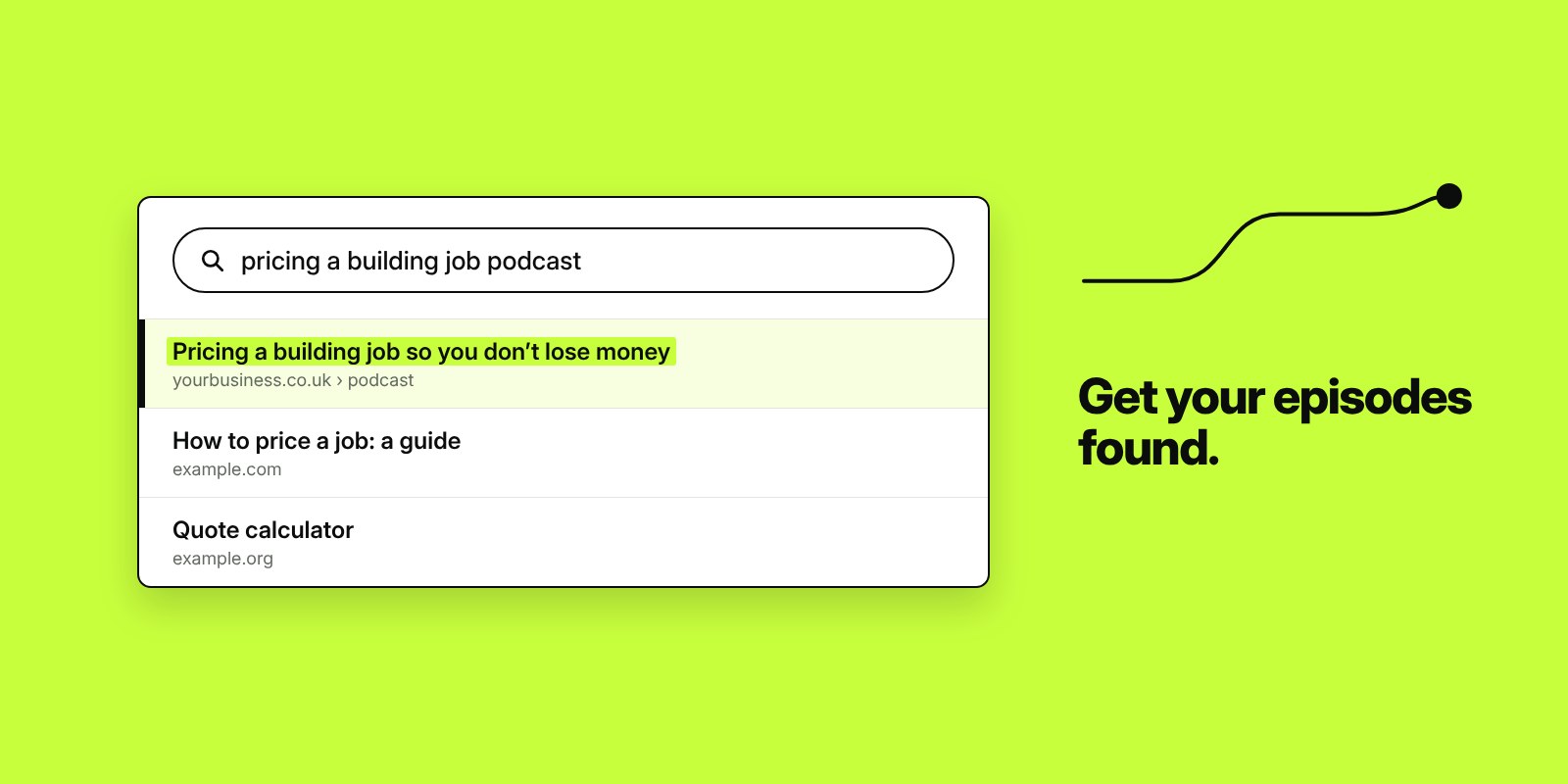
- Lead with the topic. “How to price a building job so you don’t lose money” beats “Episode 14: Sarah Jones”.
- Use your listener’s words. Say “Google Ads” if that’s what they’d type, not “paid search”.
- Put the guest second. “Pricing a building job, with Sarah Jones of Jones Builders” works for search and still credits the guest.
- Keep it short enough to read. Around 60 characters avoids most titles being cut off in search results.
- Skip the episode number at the front. If you use one, put it at the end.
The show’s own name matters too. A name that says what the show covers helps people find it in the apps. Read how to name your business podcast.
Give every episode a page on your website
A podcast app won’t help your website rank. An episode page will. Each page should have:
- A clear title written for search, as above.
- A short introduction: who the episode is for and what they’ll learn.
- The key points, as headings and short paragraphs. This is the text Google reads.
- A transcript or a full written summary. Transcripts give Google more to understand, but a well-written summary is more useful to readers.
- The audio player and the YouTube video embedded.
- Links to the most relevant service page and to related episodes or blog posts.
- A link to the guest’s website, and a photo if you have one.
For the strongest episodes, go further and turn the best section into a full blog post. Read one recording, a month of content. If your site is new to SEO, our guide to how long SEO takes explains what to expect.
Optimise for YouTube
- Title. The searchable topic first, as above.
- Description. Two or three sentences that say what the episode covers, then a link to the episode page on your website and your main service page.
- Chapters. Add timestamps in the description so viewers can jump to the part they want. YouTube shows them as chapters.
- Thumbnail. A clear face and three or four large words. Keep a consistent style so your episodes are recognisable.
- Captions. Check the automatic captions, especially names and industry terms.
- Shorts. Upload your best clips as Shorts that point to the full episode.
- Playlists. Group episodes by topic so viewers keep watching.
YouTube only works for a video podcast. Read video or audio podcast for why we recommend recording video.
Get found in the podcast apps
- Show title and description. Say who the show is for and what it covers in plain words. The apps’ search reads both.
- Categories. Choose the most accurate category in your hosting settings, such as Business or Entrepreneurship.
- Episode descriptions. Start with a sentence on what the listener will learn. The first line is all most people see.
- Cover art. Clear and readable at the size of a thumbnail on a phone.
- Consistency. Publishing on a regular schedule helps listeners, and a steady back catalogue gives the apps more to show.
Use your guests to get links
Links from other websites still matter for ranking on Google, and guests are the easiest way to earn them. Make it simple for them:
- Send each guest a short message when their episode goes live, with the link to the episode page, a clip and a ready-written post.
- Ask if they’d add the episode to their website’s press or media page.
- Credit them on the episode page with a link to their site. People are more likely to link back to a page that links to them.
The same works when you appear on other people’s shows: ask for a link to your website in their show notes.
Measuring podcast SEO
- Google Search Console shows which searches bring people to your episode pages. Our guide to using Search Console shows how.
- YouTube Studio shows how viewers found each video, including YouTube search terms.
- Your podcast host shows downloads by episode and app.
- Google Analytics shows whether visitors to episode pages go on to your service pages or get in touch.
Getting help
This is where a studio run by a marketing agency is different. As well as recording and editing at our podcast studio in Swindon, we plan titles, descriptions and clips so episodes are found by the people you want to reach. Podcast Setup includes an episode website and a template for every new episode page. If you want your whole website to rank better, see our SEO services.
Frequently asked questions
What is podcast SEO?
Podcast SEO means making your episodes easy to find in search: on Google through pages on your website, on YouTube through titles, descriptions and chapters, and in podcast apps through your show and episode titles and descriptions.
Do podcasts show up on Google?
Yes. Google can show podcast episodes, YouTube videos and website pages in its results. The most reliable way to rank is a page on your own website for each episode, with useful text and a clear title.
Should I put transcripts on my website?
They help, because they give Google more text to understand. A well-written summary with headings is often more useful to readers, so many businesses publish a summary and add the transcript below it.
How should I title a podcast episode for SEO?
Lead with the topic in the words your listeners would search for, put the guest’s name after it, and keep it to around 60 characters. Avoid starting with the episode number.
Does YouTube help a podcast get found?
Yes. YouTube is one of the most used search engines in the world, and many people now watch podcasts there. A video episode with a clear title, description and chapters can be found by people searching for your topic.
How do I get backlinks to my podcast?
Your guests are the easiest source. Send them the episode link, a clip and a ready-written post when it goes live, credit them with a link on the episode page, and ask whether they’d add it to their website.

Founder of The Pursuit Agency in Swindon. He has worked in SEO for fifteen-odd years and leads the agency's SEO and Google Ads work for owner-led businesses across the UK.